Gaonkaari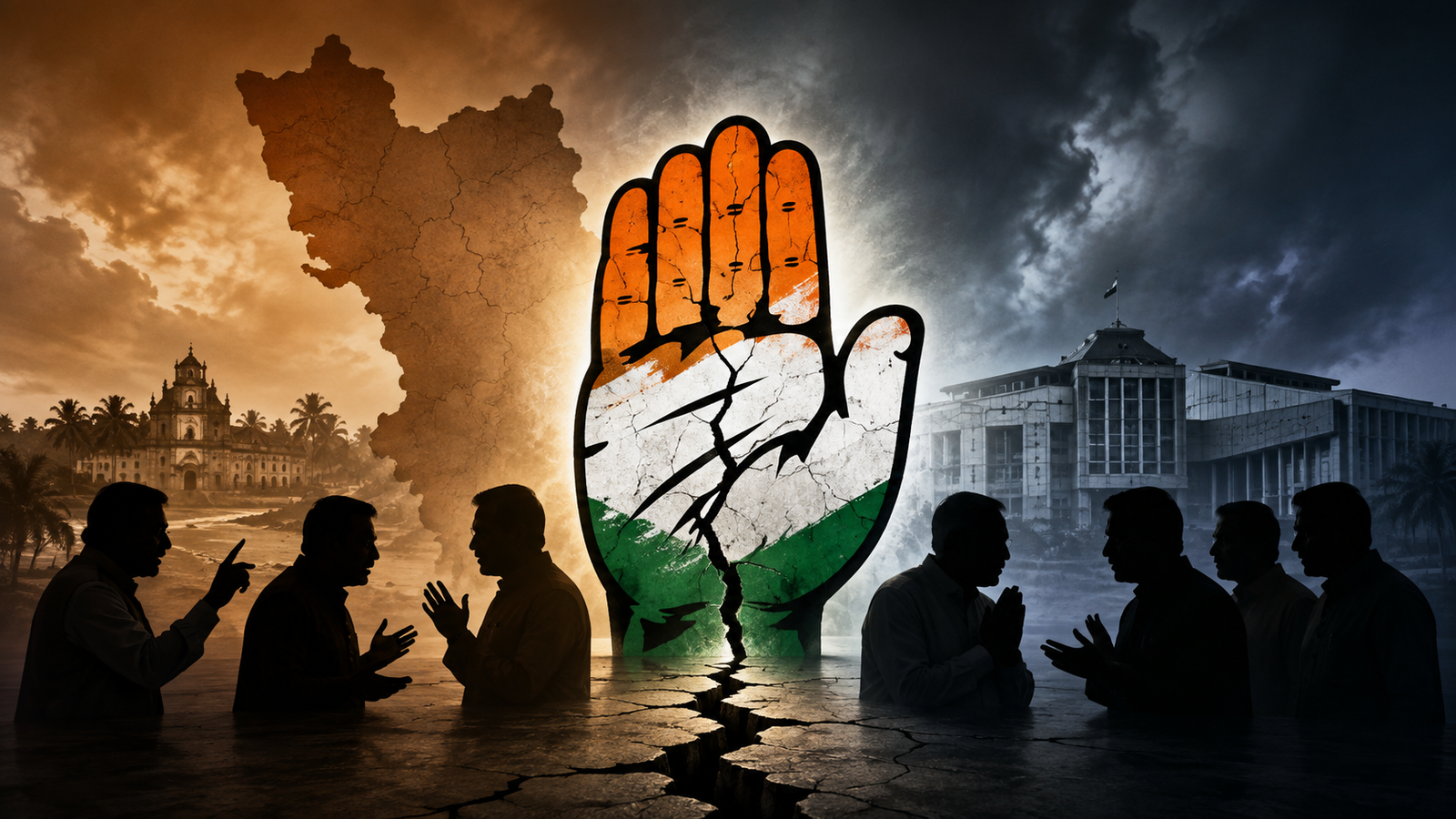
By a Congress Well-Wisher
The three-day monsoon session of the Goa Legislative Assembly ended on September 2, leaving behind a serious question for the Opposition, and particularly for the Congress: was the session used effectively to represent the concerns of the people, or did the Opposition merely participate in a legislative exercise dictated by the government’s calendar?
Three days are hardly sufficient for a meaningful Assembly session when Goa is facing major issues concerning land, TCP policies, Section 39A, No Development Zones, unemployment, inflation, mining, environmental degradation and law and order.
When the Opposition knows in advance that several important issues may be disallowed, curtailed or overshadowed by government business, merely attending the House without a larger political strategy risks creating the impression that everything is functioning normally.
There is, therefore, a growing feeling among Congress well-wishers that the Opposition should have considered a complete boycott of such a short session and taken its battle directly to the people. It could have sent a strong message that the Assembly should not be reduced to a mechanism merely for clearing Bills and completing formalities.
If elected representatives remain inside the House despite having little opportunity to seriously debate public concerns, voters are bound to question whether the Opposition is doing enough to challenge the government.
Congress Cannot Ignore Election Preparedness
The Congress leadership also cannot afford to remain complacent about the timing of the next Assembly election.
Whether elections are held according to the expected schedule in 2027 or political speculation about an earlier poll gathers momentum, the Opposition must remain prepared for every possibility.
For the BJP, a divided Opposition would be the biggest advantage.
A fractured Congress, strained relations with the Goa Forward Party, new political formations and the absence of a coordinated anti-BJP strategy could divide votes even without any major electoral wave in favour of the ruling party.
The Congress must understand that the BJP does not necessarily need to dramatically increase its support if the Opposition vote is divided among several parties.
New Political Formations Need Close Watch
The emergence of parties with names that could potentially create confusion among voters also deserves political scrutiny.
The appearance of the Goa Congress Party has already generated discussion among Congress supporters, particularly over whether a party carrying a name closely resembling that of the Indian National Congress could cut into the Congress vote.
There are also allegations and suspicions among some Congress well-wishers that powerful business or mining interests could encourage smaller political formations to fragment the anti-BJP vote. Such claims would require evidence, but politically, Congress cannot afford to dismiss the possibility of vote-cutters entering the electoral field.
Goa has repeatedly witnessed situations where smaller political formations, independents or breakaway groups have influenced results by splitting narrow vote margins.
Congress must therefore deal with such political challenges through organisation and voter awareness rather than merely complaining after the election.
Relationship With GFP Must Be Repaired
Equally important is the Congress relationship with the Goa Forward Party.
If senior Congress leaders publicly undermine potential allies or fail to maintain communication and mutual respect, it could damage the prospects of a broader Opposition understanding.
Political alliances cannot be built only a few weeks before elections.
If Congress believes Opposition unity is essential to defeat the BJP, it must begin rebuilding trust with parties such as GFP well before candidate selection begins.
However, there is an even more important question before Congress.
How can it unite the Opposition when it has not yet fully united itself?
Congress Must First Put Its Own House in Order
The biggest challenge facing the Goa Congress today is internal.
The state leadership was expected to strengthen the organisation, bring together different factions and restore confidence among workers who remained loyal to the party through difficult periods.
Instead, there remains a perception among many workers that groupism continues to influence decisions.
A Congress president cannot function only through a small circle of trusted individuals. Elections are not won by inner circles. They are won by block committees, grassroots workers, senior leaders, former legislators, youth workers and ordinary karyakartas who work at polling booths.
There is also visible frustration over the return of individuals whom grassroots workers blame for weakening the party in earlier years.
Workers have long memories.
Those who remained with the Congress while others defected or abandoned the organisation naturally expect loyalty to be recognised.
If committed workers feel ignored while politically convenient faces are rewarded, enthusiasm at the grassroots will disappear.
One senior Congressman recently described the situation in colourful Goan language, saying that “Shigmo is going on in Congress House — anyone can walk in and beat the drums.”
Behind the humour lies a serious concern: lack of discipline and coordination.
A Unity Meeting Is Now Essential
The Congress still has time to correct course, but the window is narrowing.
The state leadership should immediately convene a genuine closed-door unity meeting involving senior leaders, former presidents, sitting and former MLAs, MPs, block presidents and influential organisational workers.
The meeting should not become another photo opportunity.
Leaders who are outside the present inner circle must also be heard and respected.
Unity does not mean everyone must agree on everything. It means disagreements must be resolved within the organisation rather than through public attacks and competing camps.
Congress must also establish clear responsibilities for leaders and workers based on their organisational strength and contribution rather than personal proximity to those in power within the party.
The leadership should also take a clear political stand against dummy candidates, vote-cutters and parties attempting to exploit the Congress name or its traditional voter base.
Only after putting its own organisation in order should Congress seriously pursue a wider Opposition understanding with GFP, AAP, RGP and other forces opposed to the BJP.
Loyalty Must Have Value
Congress must remember one basic political truth: a party that cannot inspire its own workers cannot inspire voters.
Posters, rallies, Delhi visits and statements about Opposition unity will have little meaning unless the ordinary Congress karyakarta once again believes that loyalty, hard work and ideological commitment have value within the organisation.
The 2027 election will not be won only through arithmetic.
It will be won through organisation, credibility and unity.
The Congress still possesses a significant support base in Goa. But if internal rivalries continue, potential allies remain alienated and grassroots workers lose motivation, the party could face another major electoral setback.
Those raising these concerns are not necessarily enemies of the Congress.
Many are supporters who want the party to recover and become a credible alternative.
Their message is simple:
Forget Opposition unity for a moment. First unite the Congress house.
If that happens, a wider Opposition alliance can still become meaningful.
If it does not, Congress leaders may find themselves explaining another defeat after the 2027 election.