Gaonkaari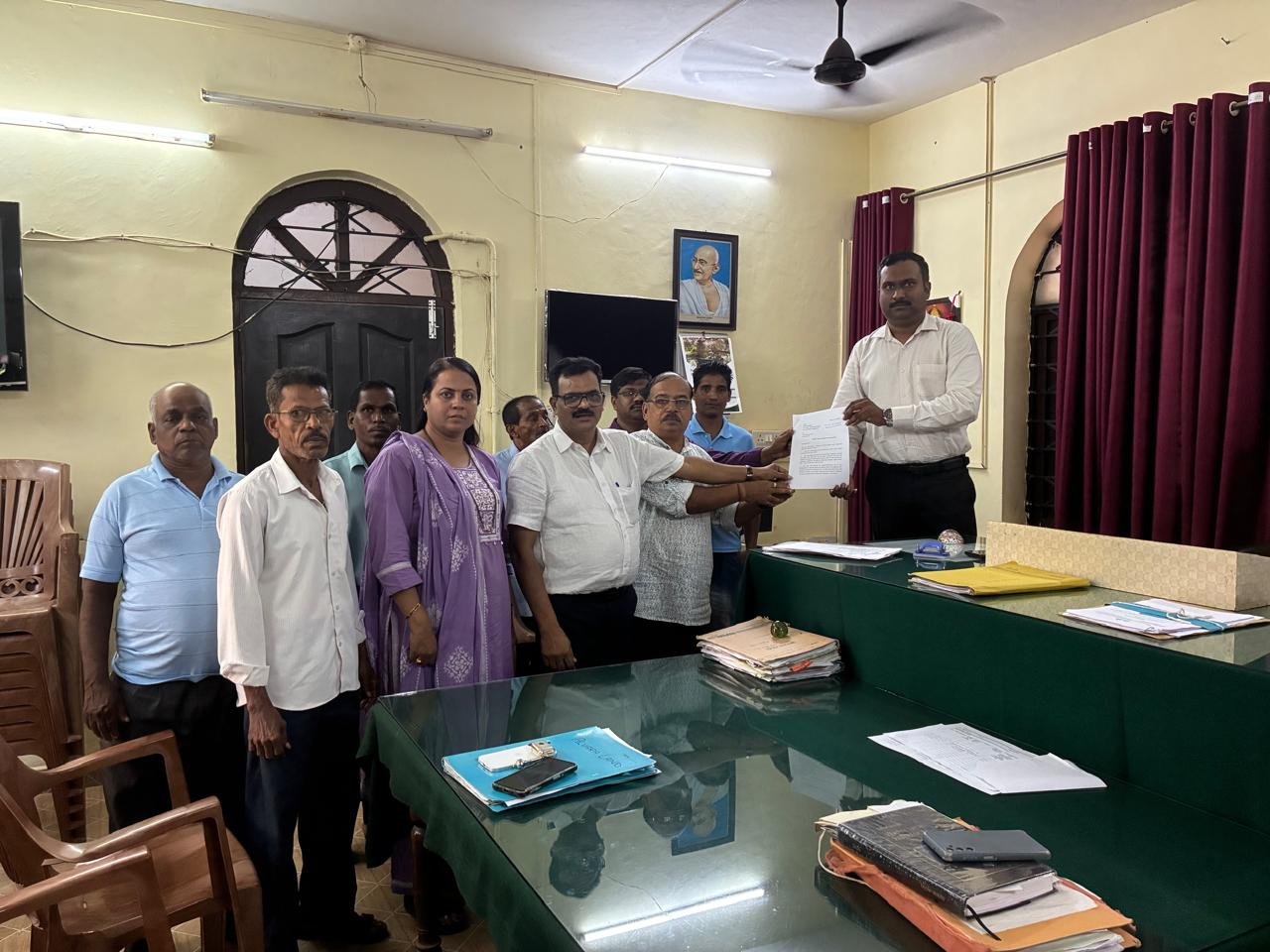
Gaonkaari, October 15: Farmers from Sattari taluka have urged the Goa government to resolve the long-pending Alvara land ownership issue by simplifying the regularisation process, recognising the rights of traditional landholders and granting Class-I occupancy status to Alvara lands.
In a detailed representation dated October 13, 2026, submitted to the North Goa Collector through the Mamlatdar of Sattari, a group of farmers led by Ranjit Rane highlighted the difficulties faced by hundreds of families who have occupied and cultivated Alvara lands for generations but continue to struggle for legal recognition of their ownership rights.
The farmers pointed out that Alvara lands were originally granted by the erstwhile Portuguese administration under Decree No. 3602 of 1917 for agricultural cultivation and residential purposes. These grants, they argued, were made under an emphyteusis or lease arrangement that provided a mechanism for acquiring private ownership rights upon fulfilment of specified conditions, including payment of ground rent known as foro.
According to the representation, several families have remained in legitimate occupation of these lands for 80 to 100 years. The farmers contend that such longstanding occupation, coupled with the provisions of the original decree, should entitle them to recognition as private landholders rather than continued treatment as occupants of government land.
Over 1,500 Alvara holders yet to apply
Highlighting the magnitude of the problem, the farmers claimed that Sattari taluka has more than 2,400 Alvara landholders, of whom only around 950 have submitted applications for regularisation. More than 1,500 holders have reportedly failed to apply.
The representation further states that the Mamlatdar’s office received 981 files for inquiry from the Collector’s office. However, only about 25 applicants have reportedly completed the required procedures, while the remaining cases have remained unresolved because of difficulties in producing historical and succession-related documents.
The farmers attributed these delays primarily to the complicated documentation requirements under the regularisation process.
Many original Alvara grantees passed away several decades ago, leaving descendants without birth certificates, death certificates, succession deeds or inventory proceedings necessary to establish their inheritance rights.
In several cases, even the dates of death of the original grantees are unknown, making it extremely difficult for present occupants to obtain the required legal documentation.
Demand for alternative proof of inheritance
To overcome these difficulties, the farmers have demanded that the government accept sworn declarations from legal heirs, supported by statements from witnesses familiar with the family history, as an alternative to formal succession deeds or inventory proceedings.
They have also suggested appointing special officers at taluka headquarters to examine complicated inheritance claims and verify the rights of descendants who cannot produce century-old records.
The representation calls for extending the two-year application period prescribed under Section 37A of the Goa Land Revenue Code, introduced through the 2017 amendment, to enable those who missed the deadline to seek regularisation.
The farmers have further demanded that all categories of Alvara lands be granted Class-I occupancy status with effect from December 19, 1961, the date of Goa’s Liberation.
They argue that the continued classification of these lands under restricted occupancy has created serious difficulties for landholders seeking bank loans, mortgages and development opportunities.
Financial institutions, according to the representation, have been reluctant to accept Alvara lands as security because of uncertainties surrounding their ownership status.
The farmers also claimed that these restrictions have affected residential and commercial development, particularly in and around Valpoi.
Government urged to identify and document Alvara lands
Another major demand concerns the lack of clarity in government land records.
The farmers have requested the government to establish a clear correlation between original Alvara grant numbers and present-day survey numbers so that landholders can identify their properties and establish their claims.
They have also sought official English translations of Portuguese-era Alvara documents and the appointment of designated officers to assist applicants in accessing historical land records.
The representation further demands that the government clearly identify Alvara properties in the records of rights and make the information publicly accessible.
Where original grantees have transferred their rights through valid registered documents, the farmers have sought regularisation in favour of the persons currently holding possession.
Oppose government takeover of cultivated lands
The farmers have strongly opposed any move to resume possession of Alvara lands that remain under agricultural cultivation merely because the occupants failed to submit regularisation applications within the prescribed period.
They have demanded that such occupants be allowed to claim ownership without being barred by the application deadline.
The representation also seeks the appointment of a dedicated officer at the taluka headquarters, equipped with relevant government records, to assist applicants and expedite the disposal of pending cases.
The farmers maintained that the Alvara issue is not merely a technical land revenue dispute but a question involving the historical rights, livelihoods and economic security of generations of Sattari residents.
They urged the Collector and the state government to adopt a sympathetic and practical approach, simplify the existing procedures and take necessary steps to resolve the longstanding grievances of Alvara landholders.
The representation brings renewed attention to the unresolved question of Alvara ownership in Sattari, where thousands of families continue to seek legal certainty over lands held and cultivated by successive generations.