Gaonkaari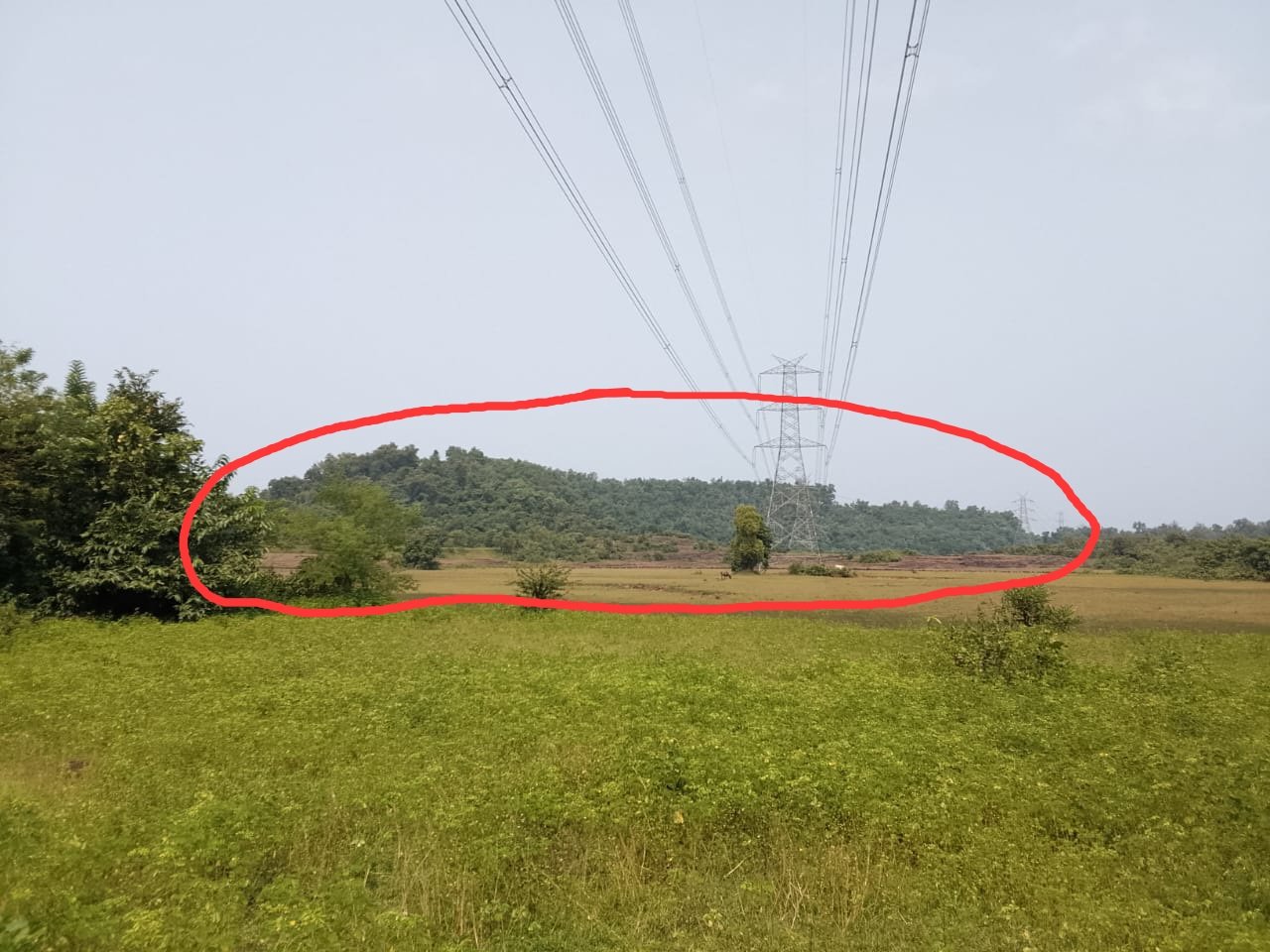
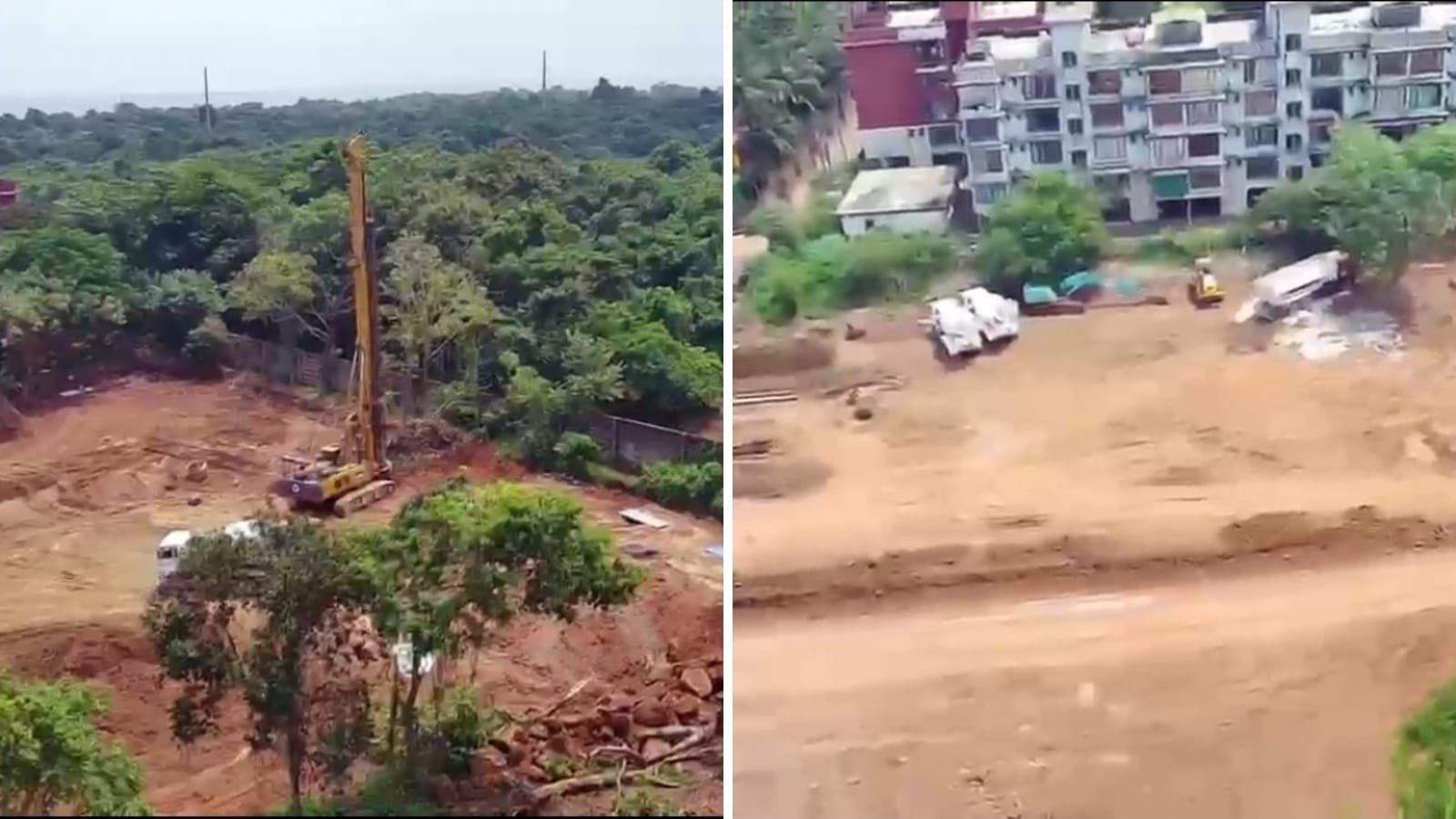
SURLA, 3 October: What was once a scar left behind by mining has, over the decades, acquired an entirely different character at Surla. The massive old mining dump at Barad Sodo has stabilised, vegetation has taken over and, according to villagers, the area now supports trees, wildlife and a regenerated ecosystem.
But what nature reclaimed over the years may now be dug up again.
The Goa State Pollution Control Board has granted consent to V.M. Salgaocar & Bros for handling the Barad Sodo dump, spread across 96.39 hectares, with a proposed ore extraction capacity of around 3.1 million tonnes per year, according to the reported project details. The company proposes to screen the material and transport the recovered ore to its loading facility at Vagus-Pale.
The approval comes under Goa’s 2023 policy for regulating iron-ore dump handling. The policy allows eligible old dumps to be rehandled subject to statutory requirements, royalty and other conditions. The policy itself says environmental and ecological considerations must form part of dump handling.
A dump when ore was cheap, a fortune today
For Surla residents, however, this is no longer simply a question of clearing an old mining dump.
Villagers claim the mineral material lying at Barad Sodo could now be worth around 4,000 crore. That figure is a local estimate and has not been independently verified. But the broader economics of Goa’s old dumps has changed dramatically: material discarded as uneconomical decades ago can have substantial commercial value today.
That change in value is precisely why Goa’s old dumps have become sought-after mineral assets. The state’s 2023 policy itself records that declared mining dumps across Goa exceeded 700 million metric tonnes, though some had already been worked.
The controversy therefore raises a fundamental question for Surla: when an old mining dump has remained untouched long enough to become part of the landscape and develop substantial vegetation, should its commercial mineral value automatically outweigh the ecological and agricultural consequences of disturbing it?
That question assumes added significance because earlier reporting on the government’s dump policy indicated that stabilised and vegetated dumps not contributing to environmental degradation were envisaged as lower priorities for handling, compared with unstable dumps or those damaging surrounding ecosystems.
Mining compensation in one hand, fresh mining fears in the other
There is another uncomfortable dimension.
Surla is an overwhelmingly agricultural village, with extensive kulagars and cultivated land, and it falls in the Sanquelim Assembly constituency represented by Chief Minister Dr Pramod Sawant.
Only weeks ago, the Chief Minister distributed about 2.90 crore to 70 Surla farmers as compensation following a prolonged dispute and court battle over mining-related damage. The compensation had remained pending for years.
Now villagers are asking whether Surla could again be exposed to the very consequences for which its farmers have finally received compensation.
Their concern is not restricted to the physical removal of the dump. Handling millions of tonnes of material means excavation, screening, dust-control operations and movement of ore. The GSPCB conditions themselves underline the potential risks: the company has reportedly been required to provide toe walls, filter beds, check dams, garland drains, arrestor walls and settling ponds; monitor groundwater, surface water and ambient air; prevent silt and runoff from entering farmland; and control fugitive dust.
For residents, those safeguards themselves demonstrate what is at stake if controls fail.
Transport lobby versus village transporters
A parallel battle is developing over the promise of transportation business.
Some mining truck owners are supporting commencement of dump handling on the ground that it could revive ore transportation and generate business. Villagers, however, allege that several of those pushing this argument are from outside Surla.
Local transporters have taken a markedly different position, according to residents: they have extended support to the villagers opposing activity that they believe could threaten Surla’s agricultural and ecological interests.
That has changed the nature of the debate. It is no longer simply “mining versus environment” or “jobs versus opposition”. It is also becoming a question of who receives the economic benefit and who carries the environmental cost.
The test is now before the Chief Minister
The Barad Sodo controversy consequently lands directly at the doorstep of the Chief Minister.
On one side is the state’s policy to unlock economically valuable ore trapped in Goa’s old mining dumps and the commercial interests seeking permission to handle them.
On the other is a village in his own constituency whose farmers have already spent years seeking redress for mining-related damage and who now fear that disturbing a massive, long-stabilised dump in the midst of an agricultural landscape could start another cycle of dust, siltation, truck movement and ecological disruption.
The regulatory approval may permit dump handling. But permission on paper does not by itself settle the larger question confronting Surla: what has changed on the ground during the decades in which this dump was left untouched?
Before the first excavator moves in, villagers are likely to demand answers about the present vegetation and wildlife, the impact on surrounding kulagars and water systems, transportation routes and volumes, dust and runoff risks, and whether dismantling a regenerated 96-hectare landscape is environmentally justified.
For Chief Minister Pramod Sawant, therefore, Barad Sodo may become more than another mining file. It could become a test of how his government balances the renewed commercial value of Goa’s mining legacy against the interests of a farming village that has already paid a price for that legacy.