Gaonkaari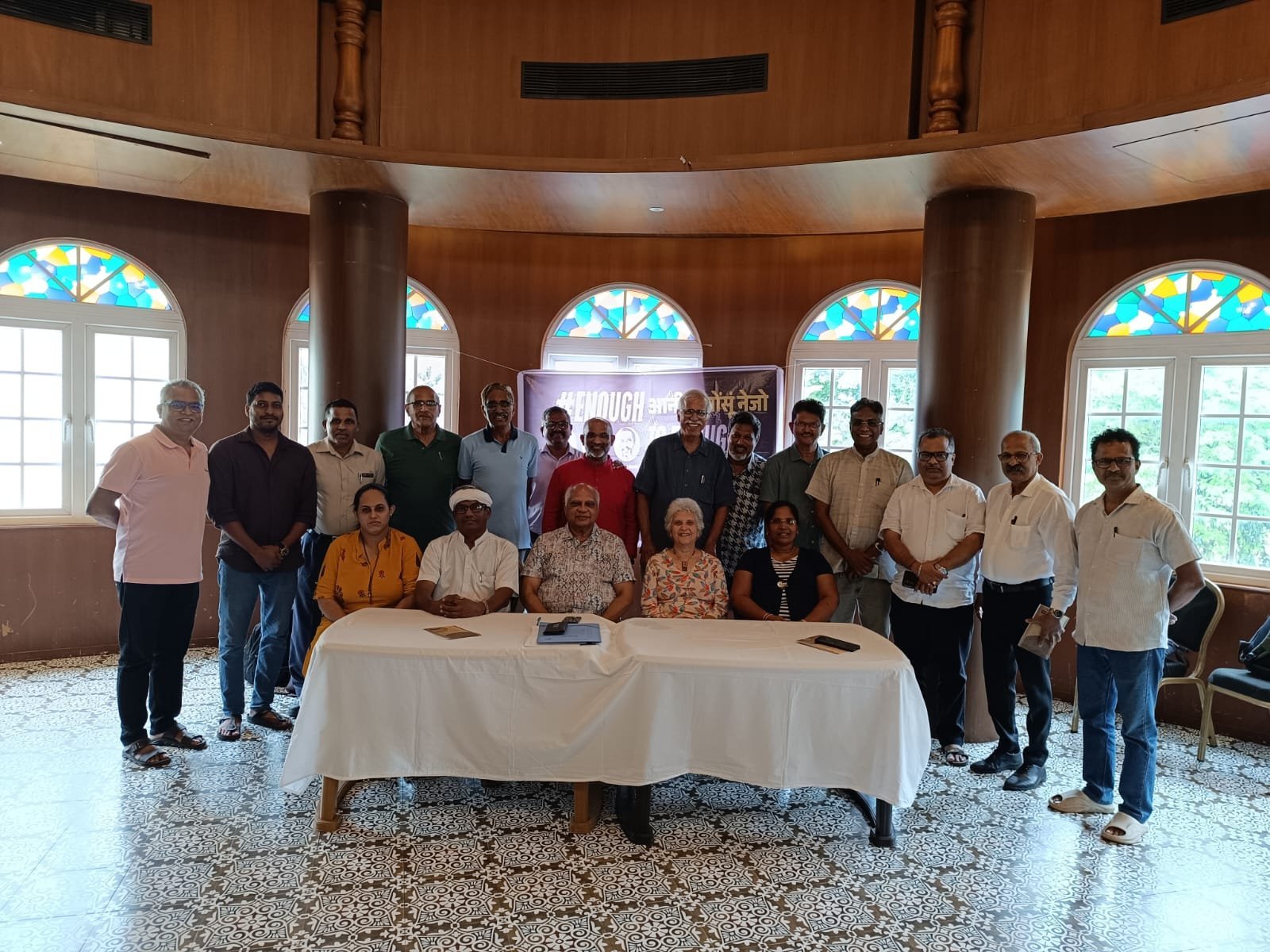
Panaji, August 29, 2026: The citizens’ movement Enough Is Enough has decided to intensify its legal battle against alleged misuse of official power, while simultaneously stepping up its campaign for the protection of Goa’s agricultural land, identity, culture and heritage.
The decision was taken at a crucial core committee meeting held under the leadership of movement convenor and retired Justice Ferdin Rebello.
The movement has indicated that several cases involving alleged misuse of authority by public servants are currently under examination and that legal proceedings could be initiated in the coming days. The Karapur land issue and the casino controversy have been identified as priority matters.
According to Enough Is Enough, action will be sought against public servants who have allegedly abused their official position either for personal benefit or to extend favours to individuals or entities.
The movement also raised a larger political question over the prolonged hold of a single political party on power in Goa. It suggested that when political power remains concentrated in the hands of one party for a prolonged period, the absence of effective checks and balances can create conditions for the misuse of authority.
Without naming any political party as its target, the movement said Goa needs stronger institutions, greater accountability and a political system where those in power remain answerable to the people.
Agricultural Land Bill: Political Parties Asked to Commit
A major resolution of the meeting was to intensify the campaign for the Goa Protection of Agricultural Lands Bill submitted by Enough Is Enough.
The movement urged the government to introduce the proposed Bill in the Assembly and hold a detailed debate on it. It has also appealed to all political parties to make a clear commitment in their election manifestos to enact legislation protecting Goa’s agricultural land.
Retired Justice Ferdin Rebello said the organisation wanted the future government to implement the proposed legislation and ensure that agricultural land was not indiscriminately converted for development.
The movement also indicated that it could launch a mass agitation across Goa to press for implementation of the proposed legislation.
“We want the future government to implement the Bill. The protection of Goa’s agricultural land cannot remain merely an election promise,” the movement said.
Section 39(A) Battle in Court
Enough Is Enough said its legal challenge to Section 39(A) would continue and that the matter is expected to come up for arguments before the court later this month.
The movement maintained that its fight was not against development or any particular individual, but against the misuse of laws and governmental powers in ways that could adversely affect Goa’s long-term interests.
‘Not Against Casinos, But They Must Follow the Law’
On the casino issue, the movement made it clear that it was not seeking a blanket ban on casinos.
Its objection, it said, was to alleged violations of the legal and regulatory framework governing casino vessels operating in the Mandovi.
Enough Is Enough questioned whether casino vessels were complying with the requirements relating to entry into territorial waters and raised questions over the regulatory mechanism governing access to gaming vessels.
The organisation also pointed out that while entry into casinos is governed by provisions requiring permission from the Gaming Commissioner, the relevant rules have reportedly not been notified.
“If the rules have not been notified, how are people being allowed to enter casino vessels? The legality of such operations therefore needs to be examined,” the movement said.
Sattari Land Disputes on the Agenda
The core committee also decided to examine the long-standing Alvara and Mokaso land issues in Sattari.
The organisation plans to study the historical and legal dimensions of the issue before placing a proposal before the government for a permanent and legally sustainable solution.
It said the concerns of people dependent on traditional land rights could not be ignored and that the government must address the issue through a transparent process.
Grassroots Expansion
The movement has also decided to strengthen its organisation at the taluka and village levels, signalling an attempt to build a wider grassroots campaign on Goa-centric issues.
Enough Is Enough maintained that it was not targeting any particular individual or political party.
However, its emphasis on the need for political change and stronger checks on government power gives the campaign a distinctly political dimension as Goa heads towards the next Assembly election.
“We are not against anybody. We are here for Goa and to protect the future of Goa,” the organisation said.
The movement said its campaign would focus on protecting Goan identity, culture, heritage, agricultural land and the rights of local communities, while using constitutional and legal mechanisms to challenge decisions that it believes are detrimental to Goa.
With the Assembly election approaching, Enough Is Enough is expected to intensify its dialogue with political parties and demand clear commitments in their manifestos on agricultural land protection, governance, accountability, heritage conservation and Goa’s future development.
The organisation’s message is increasingly centred on one larger political argument: Goa needs accountability, institutional checks and a change in the political approach to governance, particularly when prolonged concentration of power risks weakening democratic scrutiny.