Gaonkaari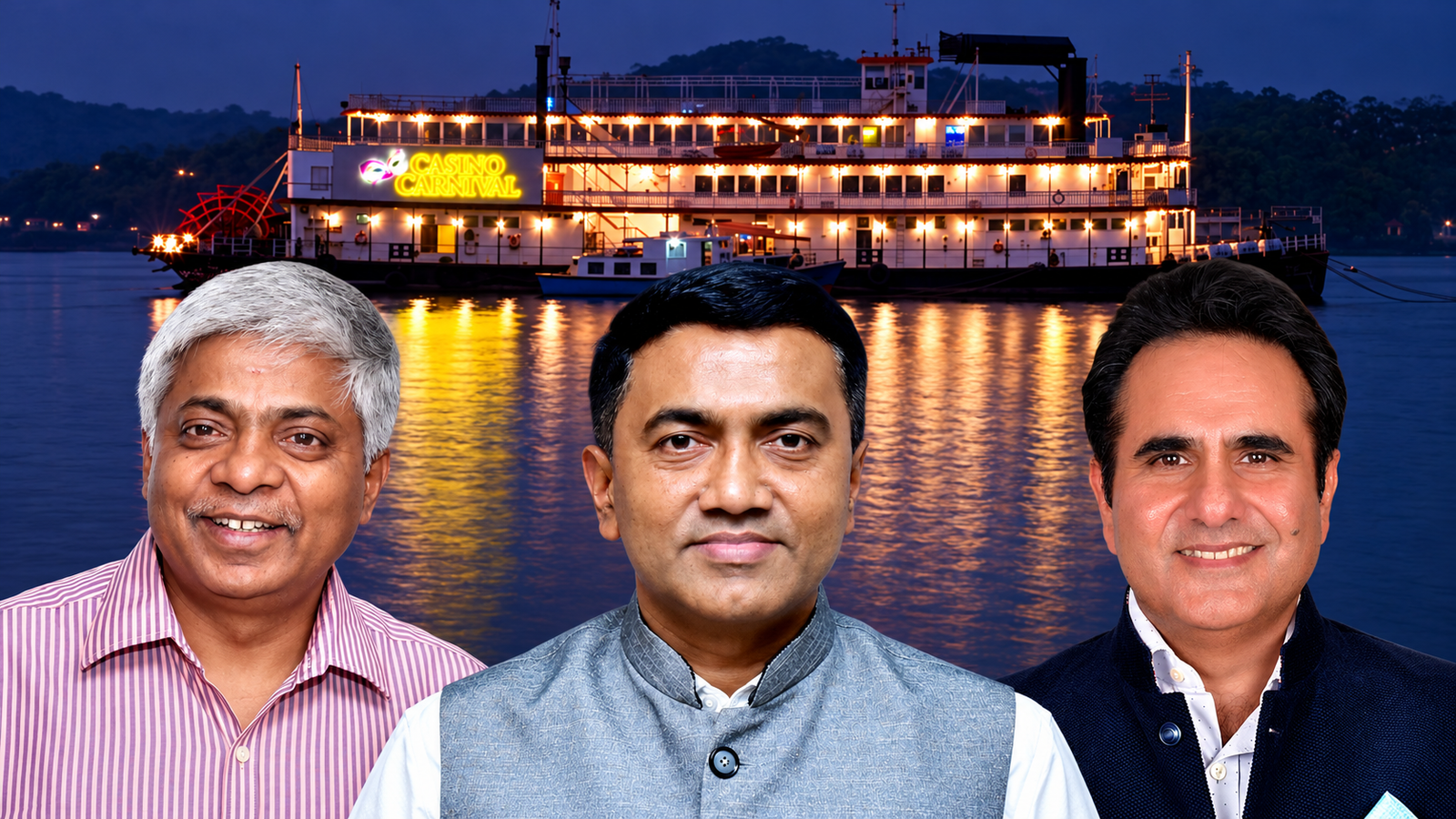
For six years, Goa has had a Gaming Commissioner on paper. The office exists, but ironically, the rules that would give it teeth do not.Panaji, 10 October: An RTI reply dated September 30, 2026, from the Office of the Commissioner of State Tax states that the Home Department has not notified the rules required for exercising the Gaming Commissioner’s powers under Section 13D of the Goa Public Gambling Act, 1976. The Commissioner of Commercial Taxes was designated as Gaming Commissioner through a government notification issued on January 30, 2020.
The contradiction is difficult to ignore. Goa has an offshore casino industry, the government earns revenue from it, and the law provides for a designated authority to supervise gaming. Yet the government’s own response says the Commissioner cannot exercise powers under Section 13D because the necessary rules have not been notified.
Section 13D envisages wide responsibilities for the Gaming Commissioner, including supervision of authorised gaming activities, maintenance of records, regulation of gaming subject to prescribed rules, closure or sealing of specified premises, custody of casino vessels, and issuance of tourist permits and related permissions.
The RTI response also states that the department does not maintain data on tourist permits issued under Section 13D(e), permissions under Section 13D(f), visits by the Gaming Commissioner to offshore casinos, or violations booked by the Commissioner.
That does not establish that no inspections or enforcement action have taken place. It does, however, raise a more fundamental question: If the designated regulator cannot exercise the relevant statutory powers, what mechanism has actually been supervising the industry?
The answer becomes more curious when the history of the office is examined.
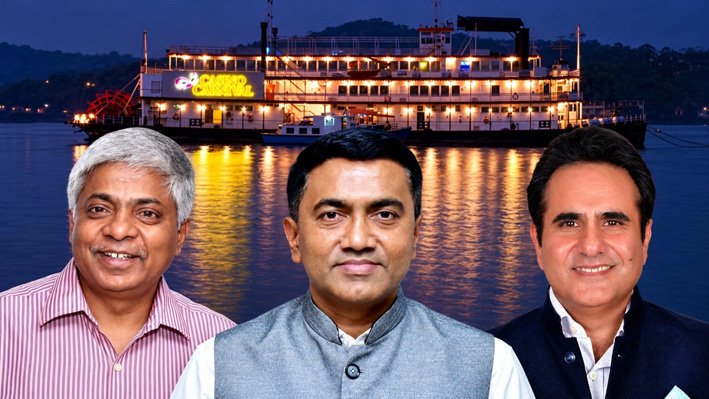
Four IAS officers have occupied the designated Gaming Commissioner’s position since 2020: Hemant Kumar, Ruchika Katyal, Swetika Sachan and Sarpreet Singh Gill. Gill, according to the RTI response, has held the position since November 2022.
The issue is not whether successive appointments were legally valid. The more pertinent question is whether the Commissioners informed the Home Department that they were unable to exercise the powers contemplated under Section 13D and, if so, what action followed.
The Home Department, headed politically by Chief Minister Dr. Pramod Sawant, is identified in the RTI response as the department responsible for notifying the rules. That places the prolonged delay firmly within the government’s administrative and political domain.
There is another institutional concern. The designated Gaming Commissioner also serves as Commissioner of State Tax. Holding both responsibilities does not, by itself, establish a conflict of interest or misconduct. But it raises a legitimate question about regulatory independence, particularly when the same administrative establishment is responsible for taxation and oversight of an industry that generates significant revenue for the state.
Then there is the question of the casinos themselves.
Section 13B provides that gaming must be confined to places or areas designated by the government through notification in the Official Gazette, including gaming aboard vessels within Goa’s territorial waters. Retired Justice Ferdino Rebello has questioned whether the continued presence of offshore casinos in the Mandovi River is consistent with the law and earlier government commitments concerning their relocation.
The legal question, however, is narrower than sometimes suggested. Section 13B does not expressly state that every casino vessel must operate 12 nautical miles out at sea. The issue is whether the Mandovi locations are validly designated and whether the permissions allowing the vessels to remain there comply with the applicable notifications.
A government notification issued in October 2013 had restricted the renewal of certain offshore casino licences for operations in the Mandovi while allowing time for relocation. Casino operations have nevertheless continued under subsequent government decisions.
Those extensions, renewals and administrative decisions now warrant independent scrutiny.
The political question is equally uncomfortable. If the Gaming Commissioner has been unable to exercise key statutory powers for years, why has there been so little sustained legislative scrutiny? Have legislators sought the Home Department’s file notings, details of inspections and violations, the legal basis for continuing Mandovi operations, or casino-related revenue records?
Questions about political financing and improper influence also deserve investigation wherever evidence exists. However, the RTI material does not establish that casino operators have bribed officials, unlawfully funded political parties or shared proceeds with political actors. Such allegations would require financial records and an independent investigation.
What the documents do establish is less sensational, but perhaps more consequential: a regulatory framework has remained incomplete for years while the casino industry has continued to operate.
That leaves Goa with a question that should have a straightforward answer.
Who, in practical terms, has been regulating its casino industry?
If the delay is an administrative failure, the government must explain how such a gap survived six years and four Commissioners. If the delay was deliberate, that is a matter requiring an independent investigation.
The RTI revelations obtained by activist Sudip Tamhankar and the legal objections raised by retired Justice Ferdino Rebello, convenor of the Enough is Enough, Goa movement, have now placed the government before a serious accountability test.
The issue is no longer whether Goa should have casinos. It is whether the laws governing them are actually being enforced.
Until the government answers that question, suspicions of a larger political–bureaucratic–casino nexus will continue to cast a shadow over Goa’s casino industry.