Gaonkaari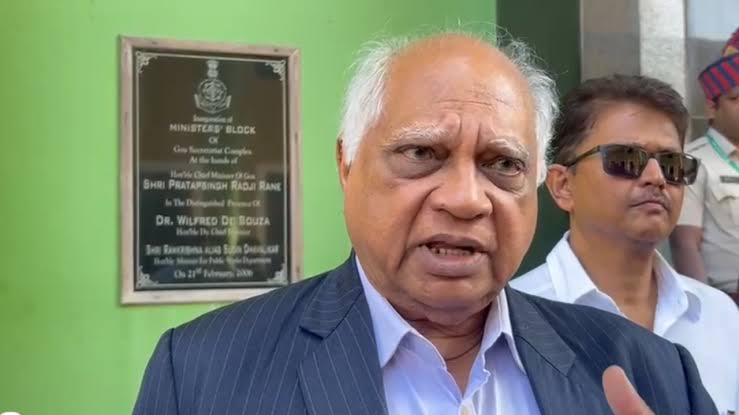
Panaji, April 20, 2026:
The “Enough is Enough” movement has escalated its campaign against controversial land conversions in Goa, demanding the repeal of Section 39A of the Goa Town and Country Planning (TCP) Act, 1974, and a review of all applications approved under Sections 17(2) and 17A.
In a detailed press statement issued on Monday, the movement accused the Town and Country Planning Board and the State Government of facilitating large-scale land conversions that allegedly benefit builders and developers at the cost of local communities.
Across Goa, protests against such conversions have been gaining momentum, with the agitation in Karapur emerging as one of the most prominent. Residents of the village have raised strong objections to large residential projects, claiming that these developments threaten their access to agricultural lands, places of worship, and natural resources, including water bodies and traditional habitats.
The movement highlighted that large-scale housing complexes could severely strain local infrastructure such as water supply, electricity, and road networks. It also flagged concerns over the degradation of topsoil and environmental imbalance, alleging that such projects are being approved without conducting mandatory carrying capacity studies.
A key point of contention raised in the press note relates to land linked to Karapur Estates, in which Goa’s Town and Country Planning Minister Vishwajit Rane is reportedly a Director, along with his spouse, who is also an MLA. The movement alleged that the development of this land has been enabled through approvals granted under Sections 17(2) and 39A of the TCP Act.
Criticising the functioning of the TCP Board, the movement stated that while the law requires public objections to be invited and considered, there is a lack of transparency in the decision-making process. It alleged that objections raised by citizens are routinely rejected without providing reasons, raising serious questions about the fairness and legality of such approvals.
The statement further pointed to what it described as an “institutional bias,” noting that Vishwajit Rane, who chairs the TCP Board, also heads the Department as the Minister in charge. This dual role, the movement argued, results in a situation where decisions of the Board are effectively ratified by the same authority, undermining independent scrutiny.
The land in question reportedly measures around 4,26,480 square metres, including areas falling within the command zone of the Anjunem Irrigation Project. As per existing norms, land within such command areas is not meant for non-agricultural use, the movement claimed.
Further allegations were made regarding the proposed development by M/s. Erricter Infra Pvt. Ltd., marketed by the Abhinandan Lodha Group. According to the statement, plots ranging from 116 to 170 square metres are being offered for sale, despite the prescribed minimum plot size being 225 square metres, except under specific provisions of the Affordable Housing Policy. The movement argued that the pricing of these plots—reportedly around ₹95 lakh or more—clearly places them outside the scope of affordable housing.
Reiterating its support for the residents of Karapur, the movement emphasised their right to protect their villages, livelihoods, and identity. It also called for a thorough inquiry into the role of all officials involved in granting such permissions, demanding strict action if any irregularities are established.
The movement has further urged Panchayats and Municipal bodies across Goa to exercise caution and refuse construction permissions in such cases, especially since the legality of Sections 17(2) and 39A is currently under judicial scrutiny.
The press note was issued by Dr. Justice Ferdino I. Rebello, Convener of the “Enough is Enough” movement, who has been at the forefront of raising concerns over land conversions and environmental governance in the State.