Gaonkaari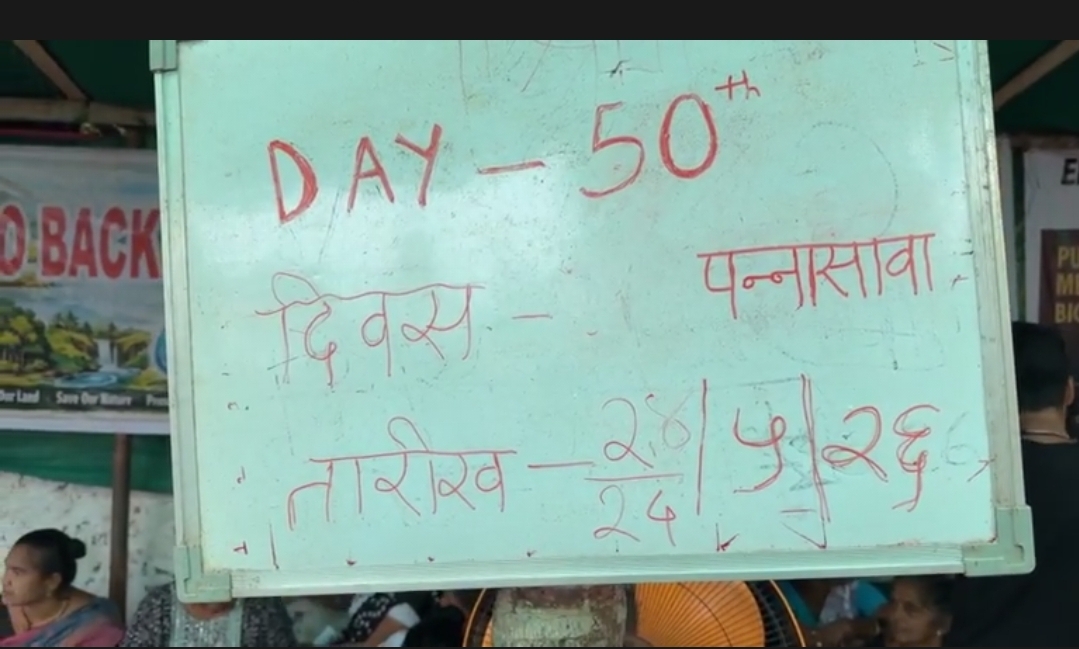
Bicholim, 24 May:
The ongoing protest movement at Karapur against the proposed project linked to the House of Abhinandan Lodha completed 50 days, with villagers and activists reaffirming their determination to safeguard the ecology, identity, and demographic balance of the village.
Residents from Karapur and surrounding areas gathered once again in a show of unity, asserting that their agitation is not merely against a single project but against what they describe as a larger pattern of unsustainable and destructive development taking place across Goa.
The protesters alleged that the proposed project could place immense pressure on local infrastructure, natural resources, water availability, roads, and the fragile ecological balance of the area. Concerns were also raised over possible long-term demographic changes and the impact such large-scale developments may have on the cultural and social fabric of traditional Goan villages.
Speakers at the protest stressed that development should not come at the cost of forests, agricultural land, biodiversity, and the rights of local communities. They said Goa’s villages are already witnessing increasing pressure from rapid land conversion and large real estate ventures, leading to fears about the future identity of local communities.
Many participants described the 50-day milestone as a symbol of growing public awareness and resistance. Villagers stated that despite pressure, criticism, and attempts to discourage the movement, the unity among locals has only strengthened over time.
Activists also emphasized that democratic protest and raising environmental concerns cannot be viewed negatively in a constitutional democracy. According to them, citizens have every right to question projects that may impact their environment, livelihoods, and future generations.
The agitation has gradually drawn support from environmentalists, social activists, and citizens from different parts of Goa, with many seeing the Karapur movement as part of a broader struggle for sustainable and people-centric development in the state.
Protesters reiterated that their demand is clear — development policies must respect ecological limits, carrying capacity, and the voice of local communities before granting approvals to mega projects.