Gaonkaari
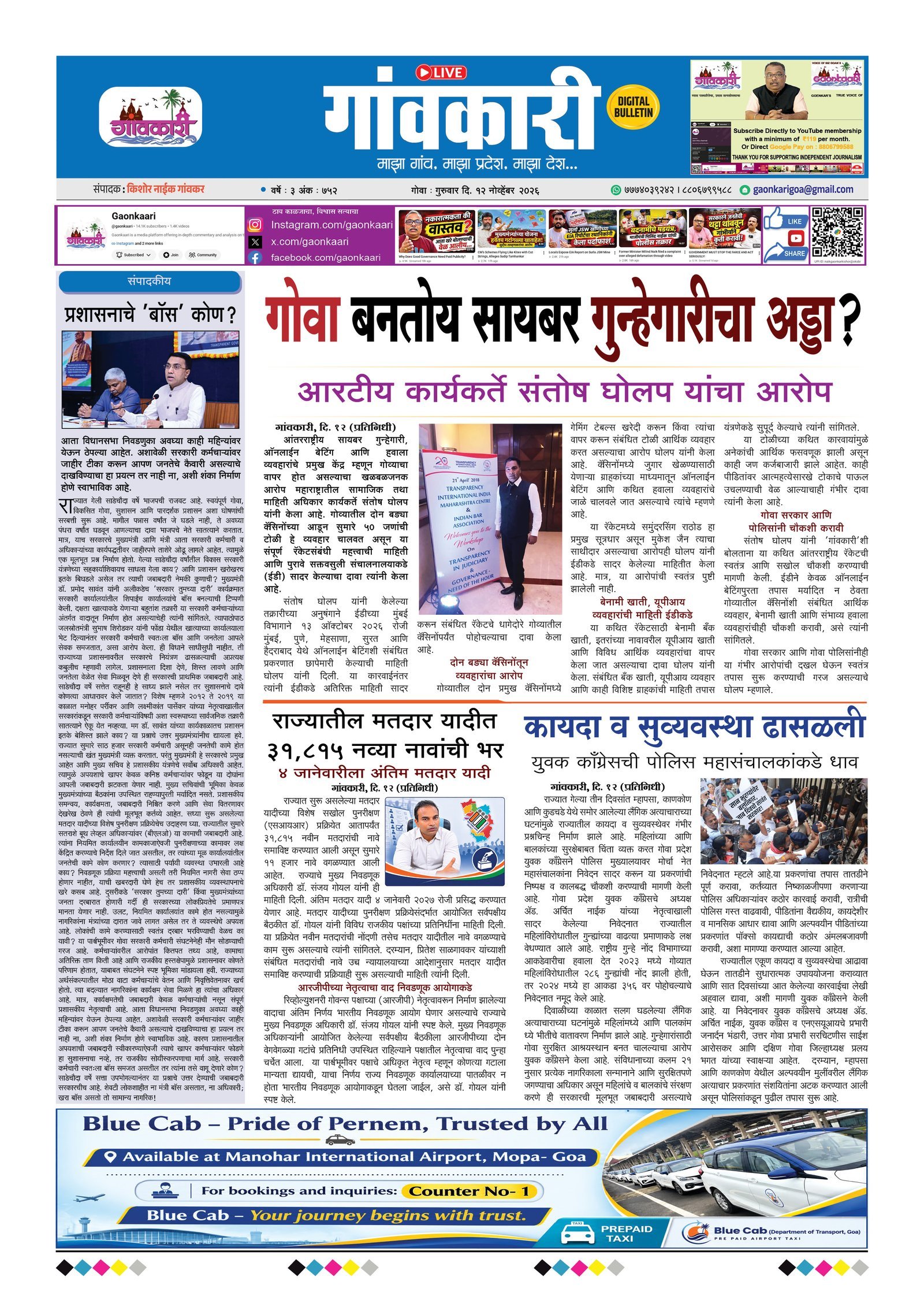
Blaming Government Employees Cannot Absolve the Political Leadership of Its Failures For nearly fourteen and a half years, the BJP has ruled Goa, repeatedly promising Swayampurna Goa, a developed state, transparent governance and an efficient administration. Its leaders proudly claim to have achieved in fifteen years what previous governments could not accomplish in fifty. However, recent statements by Chief Minister Dr. Pramod Sawant and Water Resources Minister Subhash Shirodkar raise a fundamental question: If the administration is as inefficient and undisciplined as they suggest, who should be held responsible?
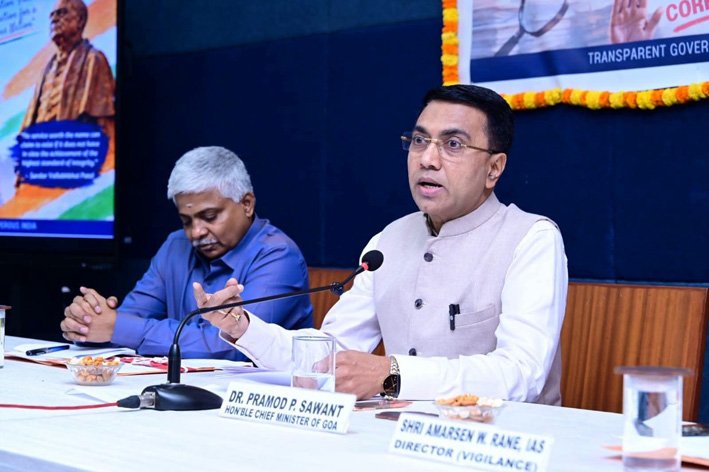
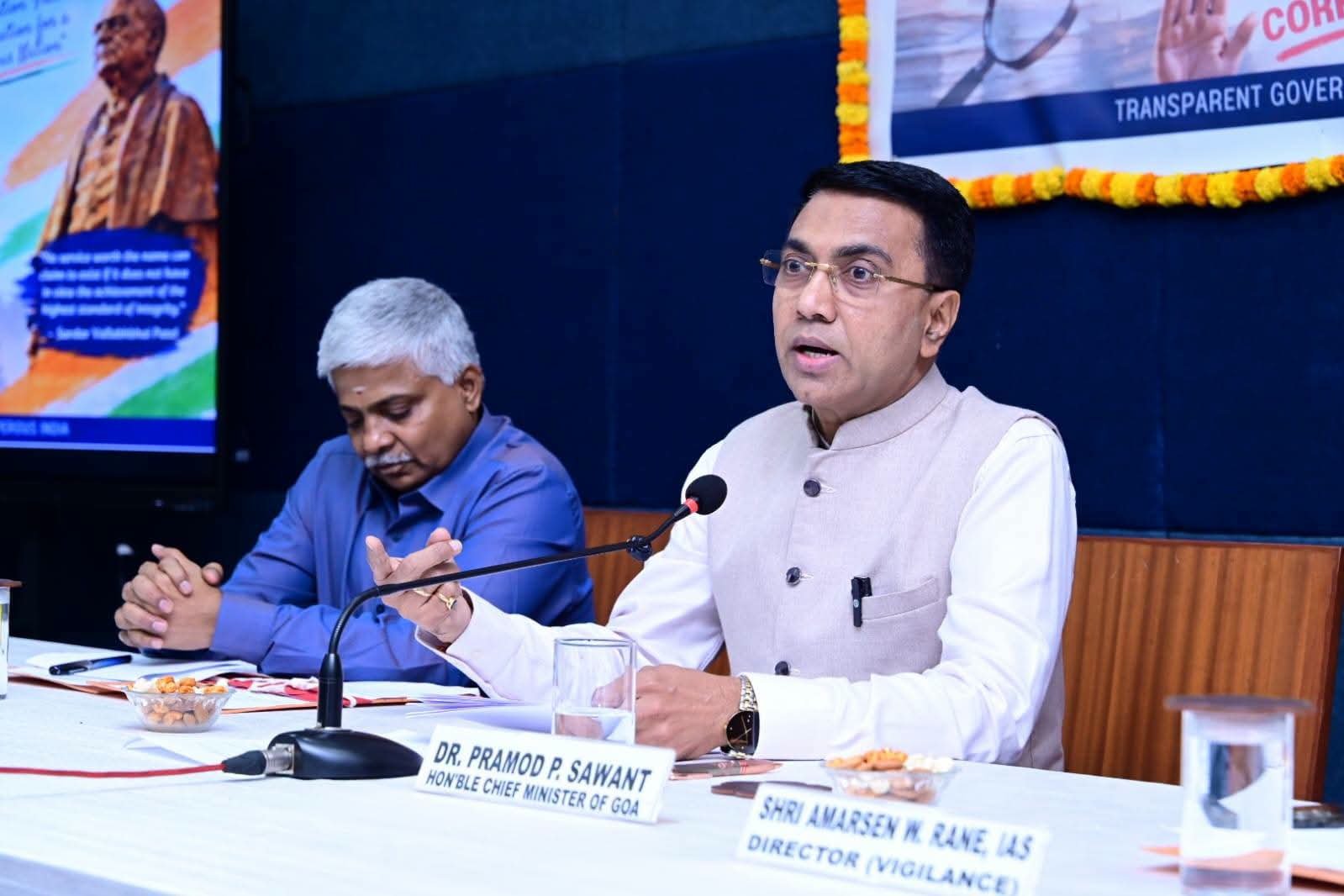
Speaking at a recent ‘Sarkar Tumchya Dari’ programme, Chief Minister Sawant remarked that even peons in government offices had become the bosses. He also claimed that a majority of complaints reaching the Vigilance Department originated from internal disputes among government employees. Not to be left behind, Water Resources Minister Subhash Shirodkar, following a visit to his department’s Ponda office, alleged that government employees considered themselves bosses and treated citizens as their servants.
These are not ordinary observations. They amount to a disturbing admission that the government has failed to exercise effective control over its own administrative machinery.
The fundamental responsibility of any elected government is to provide direction, enforce accountability and ensure that citizens receive public services efficiently. If the BJP government has failed to achieve this after nearly fifteen years in power, on what basis does it celebrate its record of good governance?
Interestingly, during the earlier BJP administrations headed by Manohar Parrikar and Laxmikant Parsekar between 2012 and 2019, such sweeping public criticism of government employees was not a recurring feature. Does this mean that administrative indiscipline has increased under Dr. Sawant’s leadership? Or has political leadership simply found government employees a convenient target for public frustration?
When the Chief Minister himself complains that public grievances remain unresolved despite Goa having approximately 60,000 government employees, the question of accountability cannot stop at the lower levels of the bureaucracy.
The Chief Minister heads the government, while the Chief Secretary leads the administrative machinery. Both have clearly defined responsibilities. The Chief Secretary is not merely expected to attend meetings alongside the Chief Minister and endorse government decisions. Administrative coordination, efficient deployment of manpower, monitoring of performance and ensuring uninterrupted public services are central to that office.
Consider the ongoing Special Intensive Revision of electoral rolls. Approximately 1,700 Booth Level Officers (BLOs) across Goa are engaged in this exercise. If these employees are required to concentrate on electoral duties instead of their regular assignments, who is attending to the public services they ordinarily provide? Has the government arranged alternative staffing to prevent delays?
Electoral revision is undoubtedly important, but ensuring that essential government services continue uninterrupted is equally necessary. This is precisely where administrative planning and leadership become crucial.
Another revealing aspect is the growing dependence on programmes such as ‘Sarkar Tumchya Dari’ and the Chief Minister’s public grievance hearings. The government may project the crowds attending these programmes as evidence of popularity and public confidence. Yet, the reality could be considerably different.
If citizens must approach ministers or the Chief Minister personally to secure routine services that government offices are legally obliged to provide, it reflects a serious institutional failure. An efficient administration should not require political intervention for every certificate, permission or pending application.
The Goa Government Employees’ Association also owes the public an explanation. It cannot remain silent while ministers repeatedly accuse employees of arrogance and inefficiency. The association must clarify whether these allegations are justified, whether staff shortages and excessive workloads are affecting performance, and how political interference influences administrative decisions.
A substantial portion of Goa’s budget is spent on government salaries and pensions. Citizens are entitled to expect efficient, timely and accountable services in return. However, responsibility for delivering those services rests not merely with individual employees but with the entire administrative and political leadership.
With Assembly elections approaching, the timing of these public attacks on government employees also raises legitimate questions. Are ministers genuinely attempting administrative reforms, or are they seeking to project themselves as champions of ordinary citizens by shifting responsibility for systemic failures onto government servants?
If the government sincerely believes employees are misusing authority, it must initiate transparent administrative reforms, establish measurable service standards, enforce accountability and address the structural weaknesses responsible for delays. Public criticism without corrective action serves little purpose.
The BJP cannot simultaneously claim credit for every developmental achievement and disown responsibility for administrative failures. If government employees have become the bosses, the political leadership must explain who allowed that situation to develop and why it remained unchecked for so many years.
Ultimately, democracy recognises neither ministers nor bureaucrats as the supreme authority.
The citizen is the real boss. And a government that forgets this fundamental principle has little moral authority to boast about good governance.