Gaonkaari
In today’s India, the machinery of government increasingly resembles a private court rather than a public institution. For even the smallest matters, citizens are compelled to approach legislators and ministers directly. Without their intervention, not a leaf stirs in government offices. This deliberate system of dependency has reduced citizens to supplicants, bound by the invisible chains of political patronage. If people fail to resist this trend, they may one day wake up to find themselves subjects of a government-king, rather than citizens of a democracy.
Patronage as Power
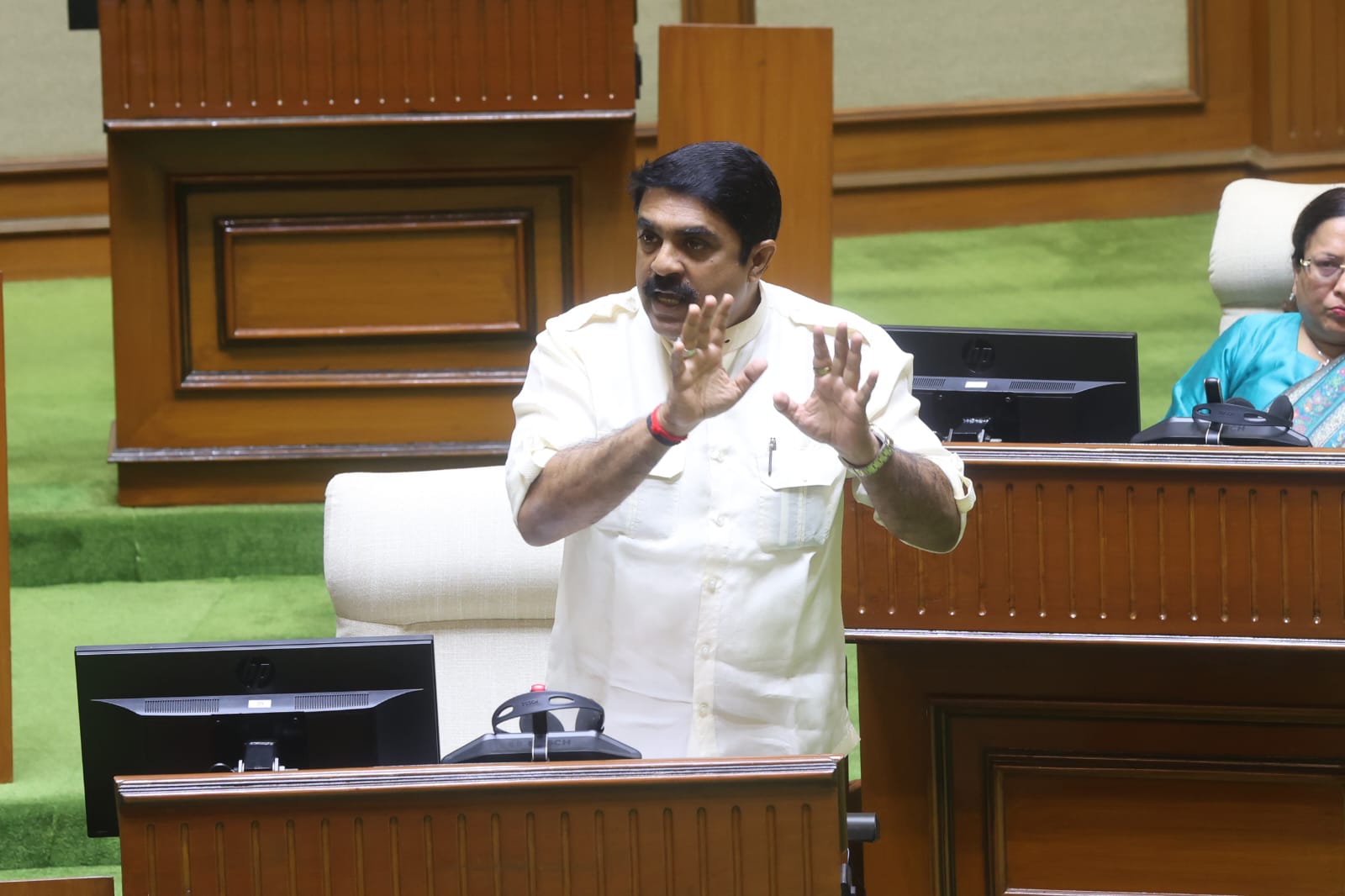
The recent remarks of Health Minister Vishwajit Rane illustrate this dynamic vividly. When questioned by journalists, he quickly reminded them how many of their colleagues had benefited from his intervention in securing health services. He even named names, suggesting that those who had once sought his help might hesitate to challenge him now.
This is not an isolated incident. Ordinary citizens, too, are forced to rely on political “links” to access routine services. Government offices stall or deflect requests until a minister’s phone call suddenly unlocks the system. In this way, politicians ensure that people remain perpetually indebted, their loyalty secured through favors. And when someone dares to oppose, the politician can retaliate with the reminder: “You once begged me for help, and I obliged.”
“Government at Your Doorstep” – A Hollow Promise
The much-publicized “Government at Your Doorstep” initiative has only deepened this feudal culture. More than ₹10 crore has already been spent on these events, while government offices lie deserted and ordinary citizens face inconvenience. Instead of strengthening institutions, solving employees’ problems, and equipping offices to deliver efficient service, the state has chosen to splurge on political spectacles. These programs serve more as platforms for patronage and commissions than as genuine service delivery.
Law Bent to Will
The Constitution promises equality before the law. Every citizen, rich or poor, is meant to stand equal in the eyes of justice. Yet in practice, laws are enforced according to the whims of officials and politicians. Whether a crime is registered or ignored depends less on the offense than on the discretion of the police officer involved. Equal justice remains a distant dream, occasionally glimpsed only when a determined citizen pursues a case to its bitter end.
Private Courts of the Powerful
Ruling leaders have transformed administration into their personal durbars. Government employees are treated like private servants, while official platforms are used for partisan sloganeering. Public service is steadily eroded, replaced by a system where nothing moves unless citizens surrender before their political patrons.
This is not democracy—it is feudalism in modern dress. Unless citizens resist the politicization of administration, they risk becoming subjects of a government that rules not by law, but by favor.