Gaonkaari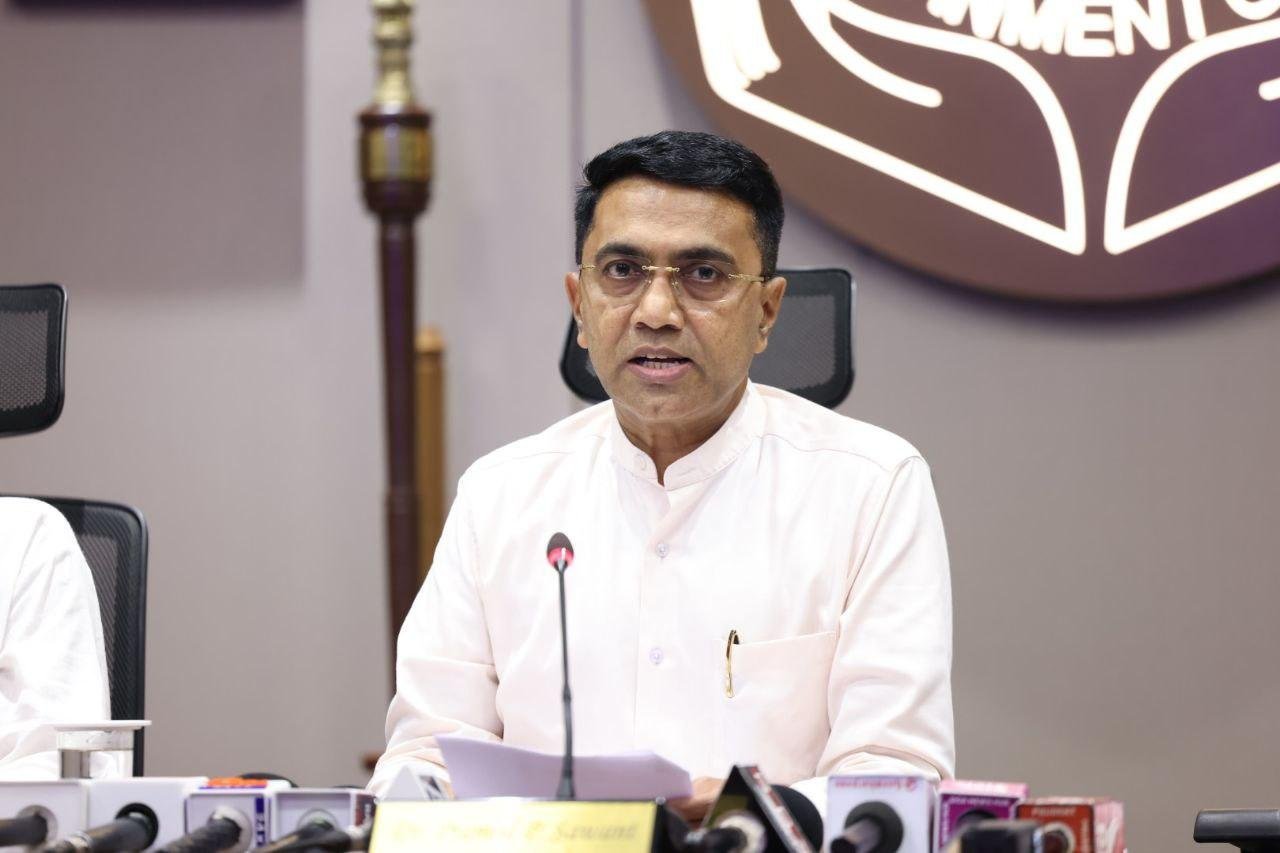
Panaji, September 3, 2026: In a major decision that could bring long-awaited job security to thousands of contractual employees across Goa, the State Government has formally notified rules for the regularisation of employees who have completed at least ten years of continuous service on a contractual basis.
The Department of Personnel issued the notification on September 3, framing the Goa (Contractual Employees Regularization in Service) Rules, 2026, following consultation with the Goa Public Service Commission.
The move marks the implementation of Chief Minister Dr. Pramod Sawant’s assurance to contractual employees that those who had put in a decade or more of continuous service would be considered for regularisation. Preliminary estimates indicate that the decision could benefit around 3,000 to 4,000 contractual employees working in various government departments, corporations, autonomous bodies, public sector undertakings and local bodies under the control of the Goa Government.
The rules will come into force from the date of their publication in the Official Gazette.
Ten years of continuous service mandatory
Under the notification, contractual employees who have completed not less than ten years of continuous service from the date of their initial contractual appointment up to the date on which the rules come into force will be eligible to be considered for regularisation.
The scheme has been introduced as a one-time measure.
It applies to contractual employees working against Group A, Group B and Group C posts as well as erstwhile Group D posts, subject to fulfilment of the eligibility conditions prescribed in the rules.
The definition of government bodies under the rules includes corporations, autonomous bodies, public sector undertakings and local bodies under the control of the State Government, significantly widening the scope of the exercise beyond employees working directly in government departments.
Outsourced and specific-purpose workers excluded
However, the notification makes it clear that not every person who has worked with the government for ten years will automatically qualify.
Employees engaged through private agencies or outsourcing arrangements have been excluded from the definition of eligible contractual employees.
Similarly, employees appointed on tenure posts co-terminus with a particular project, persons appointed under Central Government schemes, employees engaged for fixed-term academic arrangements and persons employed for a specific purpose will not fall within the general regularisation framework.
Employees working under Centrally Sponsored Schemes have also been excluded from these rules, with the government stating that they will be dealt with under specific schemes or separate rules framed exclusively for them.
Qualifications and original recruitment process crucial
Completion of ten years alone will not guarantee regularisation.
The government has laid down several mandatory conditions that an employee must satisfy before his or her services can be regularised.
At the time of the initial contractual appointment, the employee must have possessed the minimum educational qualifications prescribed under the relevant recruitment rules and must also have been within the applicable maximum age limit.
Crucially, the employee must have originally been appointed after following the due selection process applicable to direct recruitment.
This provision assumes significance because it could determine the eligibility of contractual workers whose initial appointments were made through different mechanisms over the years.
The employee’s continuous service should also not have continued because of an order passed by a court or tribunal.
Character verification and clean service record required
Regularisation will also be subject to satisfactory verification of the employee’s character and antecedents.
The rules state that an employee should not have been indicted in any criminal or departmental inquiry or proceedings. There should also be no criminal or departmental inquiry or proceedings initiated against the employee as on the date his or her case is considered for regularisation.
Another significant provision is that no regularisation or appointment order can be issued without the approval of the Chief Minister.
Thus, even after departmental scrutiny and fulfilment of eligibility requirements, the final regularisation order will require the Chief Minister’s approval.
Additional posts can be created if vacancies are insufficient
One of the most important provisions of the new rules deals with a situation where the number of eligible contractual workers is greater than the number of existing vacancies.
Ordinarily, contractual employees will be regularised against vacant sanctioned posts meant for direct recruitment.
However, if the number of eligible employees exceeds the available vacancies, the government has provided for the creation of additional deemed posts to accommodate such employees.
These additional posts will be personal to the individual employees concerned and will automatically stand abolished once the respective employees vacate those posts.
The government has also stipulated that the prescribed reservation proportion must be maintained in accordance with the State’s reservation roster and the guidelines issued by the Directorate of Social Welfare, Directorate of Tribal Welfare and Department for Persons with Disabilities.
This provision could remove one of the major administrative obstacles that often arises in large-scale regularisation exercises—the non-availability of adequate sanctioned vacancies.
No retrospective salary, arrears or seniority
While the notification grants regular status to eligible employees, it does not allow them to claim retrospective benefits for their previous years of contractual service.
The rules specifically state that regularised employees will not be entitled to benefits from the original date of their contractual appointment or from any other retrospective date.
This includes benefits such as arrears and seniority.
Regularisation will take effect only from the date on which the competent authority formally issues the employee’s regularisation order.
Employees regularised under the new scheme will also have to undergo the probation period prescribed under the recruitment rules applicable to their respective posts.
Contract service will decide priority among eligible employees
For the purpose of processing regularisation, the government has decided that eligible employees will be considered according to their seniority as contractual employees.
Their seniority for this exercise will be calculated on the basis of their initial date of entry into contractual service.
Every department and government body has also been directed to obtain an option from each eligible contractual employee regarding regularisation. Once the employee exercises that option, it will be treated as final.
Most significantly, all departments and government bodies have been given 15 days from the date the rules come into force to prepare and submit lists of eligible contractual employees to the Department of Personnel.
The short deadline indicates that the government intends to begin the implementation process without prolonged departmental delays.
Regularised staff to rank below existing junior-most employee
The notification has also settled the issue of seniority after regularisation.
An employee regularised under the scheme will be placed below the junior-most existing employee in the relevant cadre on the date the regularisation order is issued.
Inter-se seniority among the contractual employees being regularised will subsequently be determined in accordance with the applicable Seniority Rules, 1967.
After regularisation, employees will be governed by the same service conditions applicable to employees of the respective cadre, including relevant Central Civil Services conduct and disciplinary rules.
Government also bans routine contractual recruitment
Along with regularising long-serving contractual workers, the Sawant government has introduced another potentially far-reaching reform—a ban on future contractual recruitment for routine government posts.
The new rules state that government departments and government bodies shall not undertake further recruitment on a contract basis except for specific purposes.
Exceptions can be made for consultants, subject experts, personnel possessing specialised skills or manpower required for particular State or Central Government schemes.
Such future specific-purpose contractual employees, however, will no right to claim regularisation.
Their employment must end on completion of the assigned task, achievement of the purpose for which they were engaged or expiry of their contractual period, whichever occurs earlier.
The rules further discourage repeated extensions of such contracts. Where the specialised service continues to be required after expiry of the existing agreement, the department or government body will have to enter into a fresh contract rather than simply extending the previous one.
Major relief after years of uncertainty
The notification is likely to be welcomed by thousands of workers who have continued in government establishments on contracts for a decade or longer while carrying out functions of a continuing nature.
For such employees, the new rules provide a defined legal and administrative route to permanent service rather than leaving regularisation dependent upon individual departmental decisions.
At the same time, the government has sought to draw a clear line between long-serving contractual employees appointed through a legitimate recruitment procedure and outsourcing, project-specific or short-term appointments.
With departments now required to identify eligible employees and forward their lists to the Personnel Department within 15 days, attention will shift to the actual number of employees qualifying under the conditions and the speed at which individual regularisation orders are issued.
The September 3 notification therefore represents a significant milestone for Goa’s contractual workforce and gives formal effect to Chief Minister Dr. Pramod Sawant’s commitment to regularise eligible employees who have completed ten years of continuous contractual service.