Gaonkaari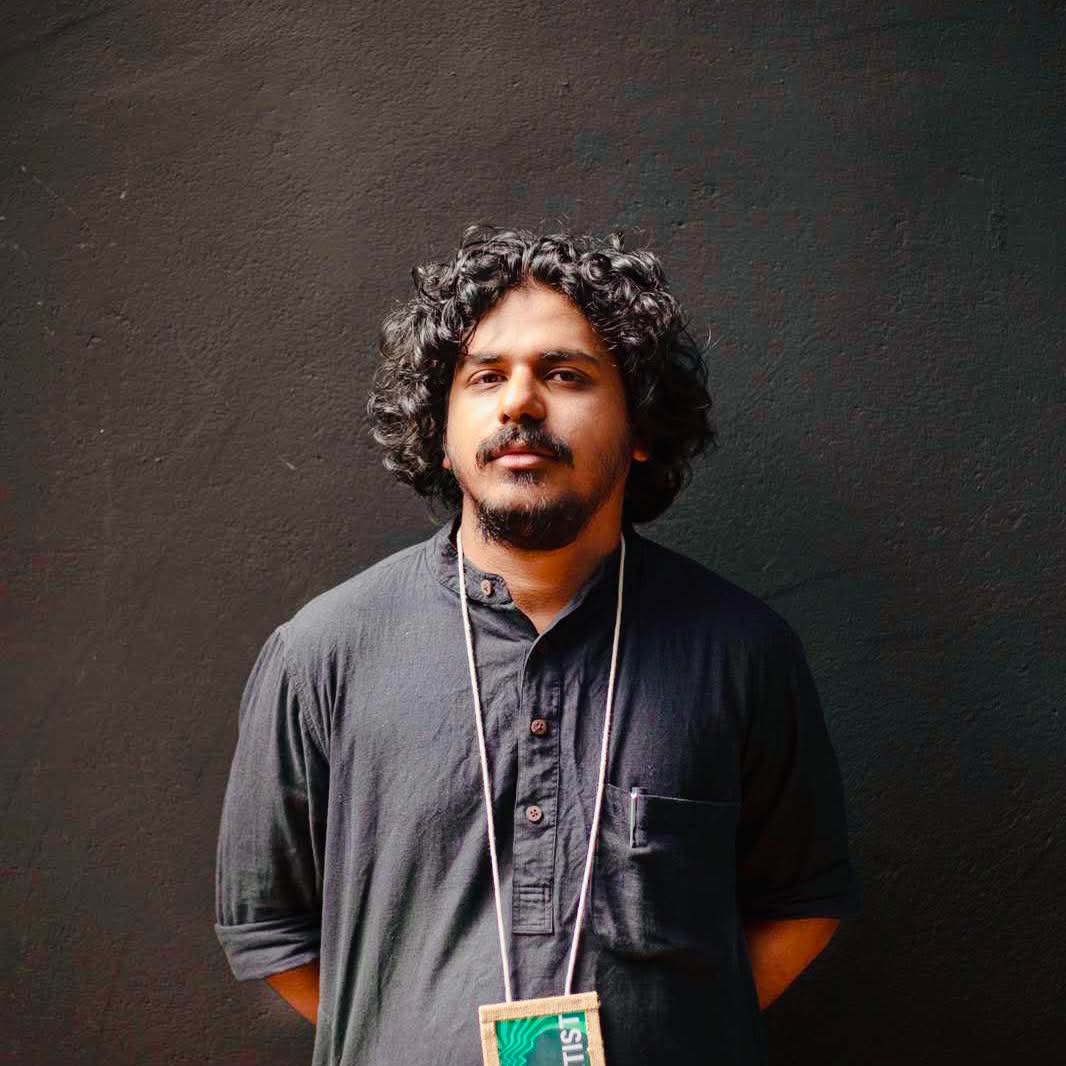
One of the most persistent myths in Goa’s linguistic discourse is the claim that Marathi was “forced” upon the people after Liberation by Dayanand Bandodkar and the Maharashtrawadi Gomantak Party (MGP). This narrative, often repeated without scrutiny, collapses when examined against historical evidence.
Marathi in Goa: A Pre-Liberation Reality
The presence of Marathi in Goa predates Liberation by well over a century. As early as 1843, formal public instruction in Marathi began at the Lyceum, marking a significant institutional recognition of the language. Sakharam Narayan Wagh was appointed as the first professor to the newly established Marathi chair. Notably, Wagh had already authored a Marathi grammar guide in Portuguese in 1819—demonstrating that scholarly engagement with the language existed even before its formal academic introduction.
Other scholars, including Filipe Nerry Pires and Suryaji Rau, further contributed to Marathi linguistic studies by producing grammar texts. This intellectual tradition reflects a sustained and evolving engagement with Marathi across communities.
Even before such formalization, Marathi instruction was actively imparted in private settings—particularly within Shenvi households. These communities, historically integrated into the Portuguese administration as escrivães (scribes), maintained Marathi as a language of literacy, record-keeping, and cultural continuity.
Growth of Marathi Education in the 19th and 20th Centuries
By the 19th century, private Marathi schools had begun to proliferate across Goa. Their numbers steadily increased, reflecting a growing demand for education in the language. This demand was not incidental—it was driven by social and economic realities.
Records from the Provincial Council debates of the 20th century provide detailed insights into this expansion. Balkrishna Savordekar, tasked with inspecting these institutions, documented the spread and significance of Marathi schools. His findings highlighted a clear trend: communities were actively seeking access to Marathi education.
For many, especially among Bahujan communities, Marathi represented a pathway to social mobility. Education in Marathi opened avenues for employment, administrative participation, and upward movement within a structured colonial society.
A telling example is the 1926 Bhandari Shikshan Parishad, which explicitly called for the expansion of Marathi schools in areas with a significant Bhandari population. This demand was not imposed from above—it emerged organically from within society.
Marathi and Political Assertion Under Portuguese Rule
The linguistic question in Goa was not merely educational—it was also political. In a significant intervention published in O Bharat, a bilingual (Marathi and Portuguese) publication edited by Hegde Desai, Savordekar argued for voting rights for Marathi-speaking people.
His advocacy sought recognition of Marathi-speaking Goans as rightful participants in the Portuguese political system. This reflects how language functioned as a tool of identity, representation, and political inclusion.
Beyond Religious Boundaries
Although Marathi was historically described as língua gentílica—the language of Hindus—the reality was more complex. A considerable number of Catholics in Goa also learned, wrote, and engaged with Marathi. This was particularly true in the New Conquests, where much of the administration operated in Marathi.
Thus, Marathi cannot be narrowly framed as a language of a single community. It functioned as a shared medium across religious and social boundaries, especially in administrative and educational contexts.
Reframing the Post-Liberation Narrative
In light of this history, the claim that Marathi was “imposed” after Liberation becomes untenable. When Bandodkar and the MGP promoted Marathi, they were not introducing an alien language—they were building upon an already deep-rooted linguistic tradition.
The persistence of the “imposition” narrative points less to historical reality and more to post-colonial political framing. Bandodkar, in this context, has often been cast as a convenient antagonist a figure through whom older power structures could redirect scrutiny away from their own longstanding participation in and benefit from colonial systems.
The story of Marathi in Goa is not one of imposition, but of continuity. It is a story of community demand, intellectual engagement, and socio-political aspiration spanning centuries.
Reducing this complex history to a post-Liberation imposition does a disservice not only to historical truth but also to the diverse communities that sustained and shaped Marathi’s presence in Goa.
Mr. Kaustubh Naik