Gaonkaari
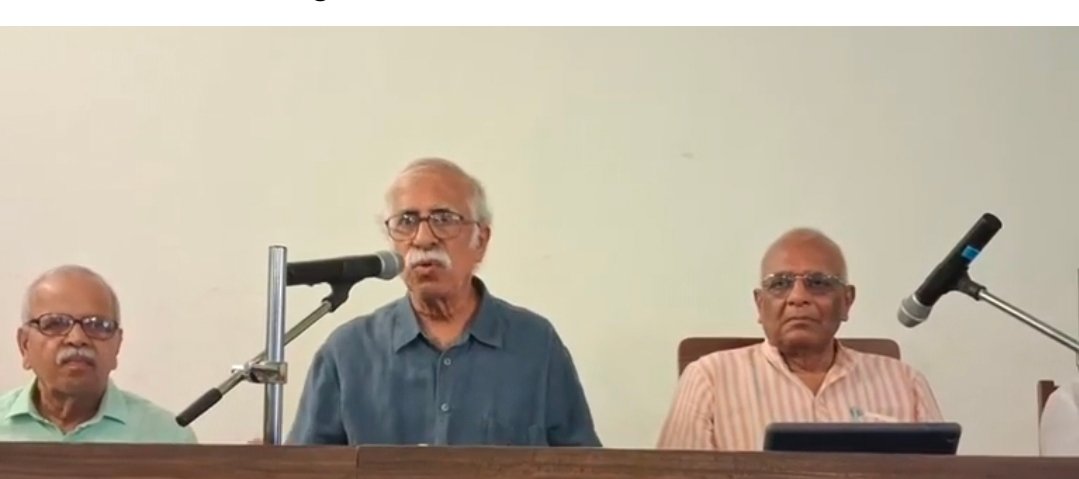
Panaji, November 23: Five decades of iron ore mining in Sirigao village of Bicholim taluka have caused extensive environmental destruction, serious health risks and economic losses estimated at a staggering ₹4,000 crore, according to a comprehensive environmental appraisal commissioned by the villagers.
The study, titled Environmental Appraisal: Impact of Iron Ore Mining on Sirigao Village, Bicholim Taluka, Goa, was prepared by environmental researcher Dr Sagar Dhara, associated with South Asia People’s Action on Climate Change (SAPACC).
Completed in September 2026 after two years of research, the report examines the cumulative impact of 50 years of mining on the village’s environment, economy, public health and traditional livelihoods.
The report describes itself as the first such study in India to quantify the financial dimensions of ecological and environmental damage caused by mining over five decades.
₹7,000 Crore Extracted, ₹4,000 Crore Debt Left Behind
One of the most significant findings is the economic imbalance between the wealth generated through mining and the losses suffered by the local population.
According to the report, iron ore extraction from Sirigao generated approximately ₹7,000 crore in gross revenue over 50 years. However, the environmental, economic and social costs imposed on the village are estimated at ₹4,000 crore.
The report provides the following breakdown:
| Category | Estimated value |
|---|---|
| Gross revenue from iron ore extraction | ₹7,000 crore |
| Direct losses to agriculture, fisheries, water, health and homes | ₹1,000 crore |
| Social and environmental externalities | ₹2,000 crore |
| Ecological restoration requirements | ₹1,000 crore |
| Total estimated damage and restoration debt | ₹4,000 crore |
The assessment estimates that the damage and restoration costs amount to approximately 60 per cent of the revenue generated from mining.
The researchers argue that while mining companies benefited financially from mineral extraction, the local population was left to bear the costs of environmental degradation, declining agricultural productivity, health problems and the destruction of natural resources.
Toxic Heavy Metals Contaminate Water and Soil
The report raises serious concerns about contamination of Sirigao’s water resources and agricultural soil.
It states that mining activities have introduced toxic heavy metals into the local environment, posing potential long-term risks to human health.
Some of the metals identified in the assessment are described as carcinogenic, raising concerns about prolonged exposure through drinking water, agricultural produce and the surrounding environment.
According to the report, traditional clean water sources have been lost, forcing residents to depend on alternative supplies that may involve additional financial expenditure.
The study recommends that the use of locally sourced water and homegrown food should be restricted until independent scientific testing establishes their safety.
Cancer Risk Estimated at 6,900–8,200 Per Million
Among the most alarming findings is the report’s assessment of potential cancer risks associated with long-term exposure to polluted air and water.
The study estimates an elevated lifetime cancer risk ranging from 6,900 to 8,200 per million people under its exposure assessment.
These figures represent modelled risk estimates and should not be interpreted as the number of confirmed cancer patients in Sirigao.
The report also refers to increased respiratory illnesses, including asthma, associated with exposure to iron ore dust and mining-related air emissions.
Apart from health concerns, mining-related vibrations and environmental changes are reported to have caused visible cracks in residential buildings.
The findings point towards a potentially serious public health challenge requiring independent medical investigation, environmental monitoring and long-term health surveillance.
Agriculture, Fisheries and Traditional Livelihoods Devastated
The report documents the decline of Sirigao’s traditional agricultural economy, which once supported families through farming, horticulture, livestock rearing and forest-based activities.
Paddy cultivation has suffered due to the loss of fertile agricultural land, while cashew, coconut and mango production have also reportedly declined significantly.
The destruction of grazing areas has affected dairy farming and local milk production.
Forest degradation has deprived villagers of access to traditional resources, including firewood, timber, kokum, tamarind and other forest products.
The report further states that mining runoff has contaminated local water bodies, adversely affecting traditional fishing activities.
According to the researchers, these losses have transformed what was once a largely self-sustaining village economy into one increasingly dependent on external resources.
Government Agencies Accused of Regulatory Failure
The appraisal is sharply critical of both state and central government regulatory agencies, alleging that they failed to adequately protect the environment and the health of Sirigao residents during decades of mining.
It concludes that the environmental changes are severe and directly attributable to mining activities, while the resulting contamination poses long-term challenges for the village.
The report invokes the polluter pays principle, arguing that companies responsible for environmental damage must bear the financial burden of compensation and restoration rather than transferring these costs to affected communities.
Report Calls for Compensation, Restoration and Gram Sabha Consent
The study makes several recommendations to the government and the judiciary.
It calls for immediate independent testing of local drinking water, agricultural produce and contaminated soil to determine whether they are safe for human use.
The researchers recommend that mining companies and leaseholders responsible for the damage be directed to compensate affected residents for health injuries, agricultural losses and destroyed livelihoods.
They also demand comprehensive ecological restoration, including soil decontamination, rehabilitation of water bodies and biological restoration of degraded land.
Significantly, the report recommends cancellation of existing mining permissions and insists that no fresh mining activities should be permitted without the unanimous consent of the Sirigao Gram Sabha.
It further proposes substantial bank guarantees from future mining operators, to be held under the supervision of the High Court, ensuring that sufficient funds are available for environmental protection and restoration.
Two-Year Study Based on Villagers’ Experiences and Economic Modelling
The appraisal was commissioned by Sirigao villagers and took two years to complete.
According to its methodology, the researchers conducted focus group discussions and individual interviews with senior residents who had witnessed the transformation of Sirigao over five decades.
Their observations concerning groundwater levels, agricultural yields, environmental changes and health conditions formed an important part of the assessment.
The researchers also used economic and scientific modelling to estimate direct livelihood losses, environmental externalities and the cost of ecological restoration.
The report describes the exercise as a screening appraisal providing high-level estimates, rather than a complete accounting of every individual loss.
Findings Raise Questions Over Future Mining Permissions
The findings assume particular significance amid efforts to resume iron ore mining in the Sirigao region.
Mining proposals in and around Sirigao have previously faced environmental scrutiny, objections and public hearings. Official records also document environmental clearance proceedings concerning mining projects in the area. Green Tribunal +2
The new appraisal raises a fundamental question about whether economic benefits from mining can justify the long-term environmental and social costs borne by affected communities.
The report argues that environmental restoration, public health protection and compensation must become central considerations in future decisions on mining.
Its central message is that the natural resources of Sirigao are a shared inheritance belonging to present and future generations, rather than merely commodities available for commercial extraction.
The ₹4,000 crore damage estimate, contamination findings and projected health risks are conclusions of the villagers’ commissioned appraisal and have not been independently verified for this report. Responses from the mining operators and the relevant government agencies are not included in the supplied document.
The study has nevertheless placed the question of accountability for five decades of mining damage firmly at the centre of the debate over Sirigao’s future.